A peer-reviewed research presentation examining why employees resist new systems — and how organizations can successfully navigate digital change.
Designed for classroom discussion
"Resistance should not be interpreted as a mere obstacle to be removed."
— Cavalcante et al. (2025)
New information systems are often introduced to improve operations, decisions, and performance; however, resistance to change can get in the way of those benefits during new information system rollouts. This research assignment examines the factors that drive resistance to change when organizations bring in new systems and automation, along with digital transformation projects. Looking into current research, the assignment examines resistance from multiple perspectives, including employee concerns, system design issues, management support, perceived benefits, perceived inertia, and organizational culture. Research results suggest that resistance does not always represent a problem that can be removed, but can also point to issues beyond the surface, such as communication, training, planning, or how the system affects daily work. Ways to address resistance include better communication, employee engagement, leadership support, training, peer support, and ongoing support after implementation. This research assignment concludes that successful information system implementation must consider both the system itself and the people who will use the system.
Organizations adopt new information systems, automation tools, and digital transformation projects to enhance operational efficiency, improve decision-making, and drive competitive performance. However, the human element is frequently overlooked. Employees may not automatically accept new technology simply because it functions technically. Resistance to change exerts a negative influence on digital transformation success (Valtonen & Holopainen, 2025; Resende et al., 2026). This presentation explores why resistance occurs and how organizations can address it effectively by integrating both technical excellence and human-centered strategies.
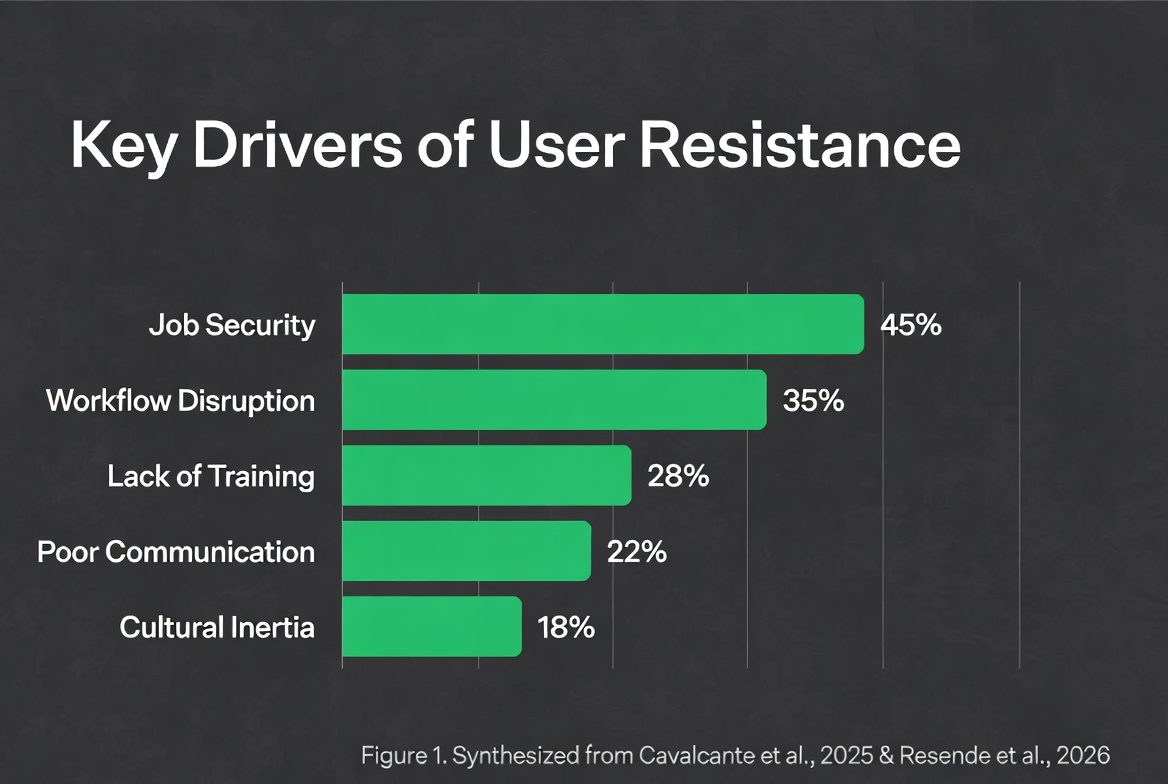
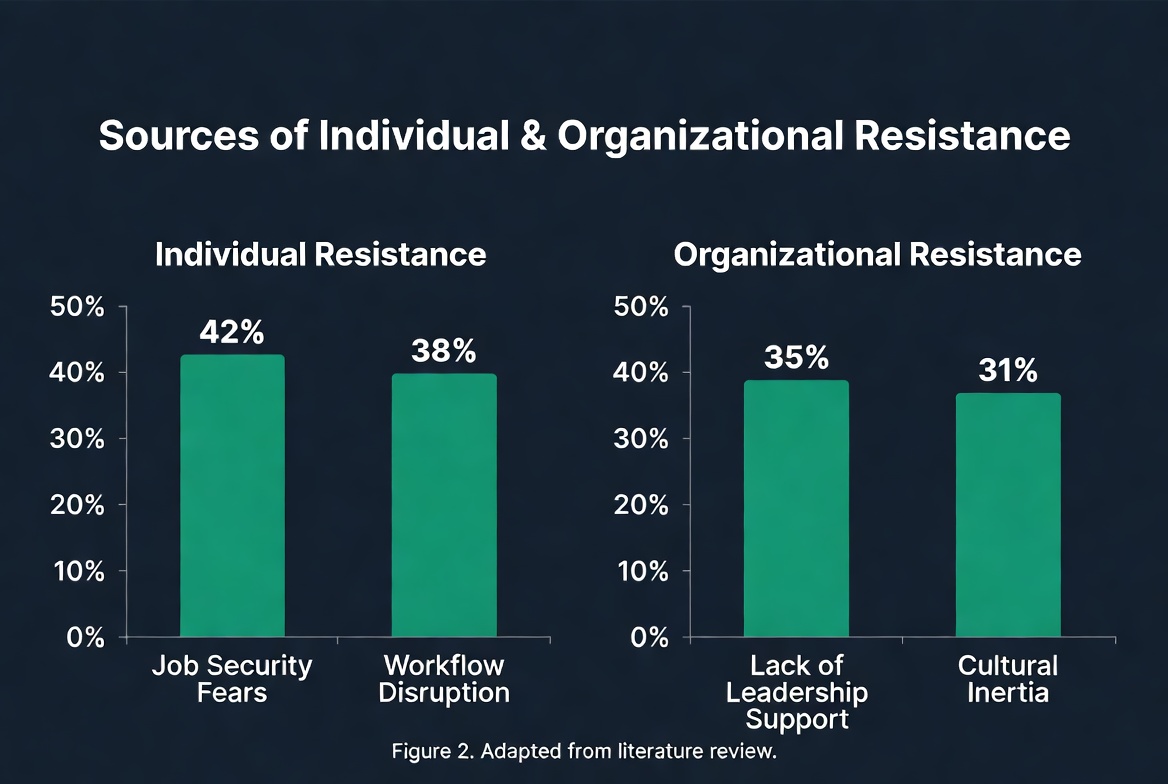
Resistance to change is defined as any behavior that seeks to maintain the status quo when new systems are introduced. It can manifest as active opposition, passive non-compliance, or hidden behaviors embedded in daily work routines. Common causes include employee concerns about job security, workflow disruption, poor system design, perceived inertia, lack of management support, and organizational culture that favors tradition over innovation (Resende et al., 2026; Valtonen & Holopainen, 2025; Cavalcante et al., 2025).
"Resistance was associated with personal factors such as a reactive mindset, myopia, and embedded routines."
— Cavalcante et al. (2025)
Understanding these causes is essential because resistance is not merely an obstacle — it often signals deeper systemic or cultural issues that must be addressed for successful implementation.
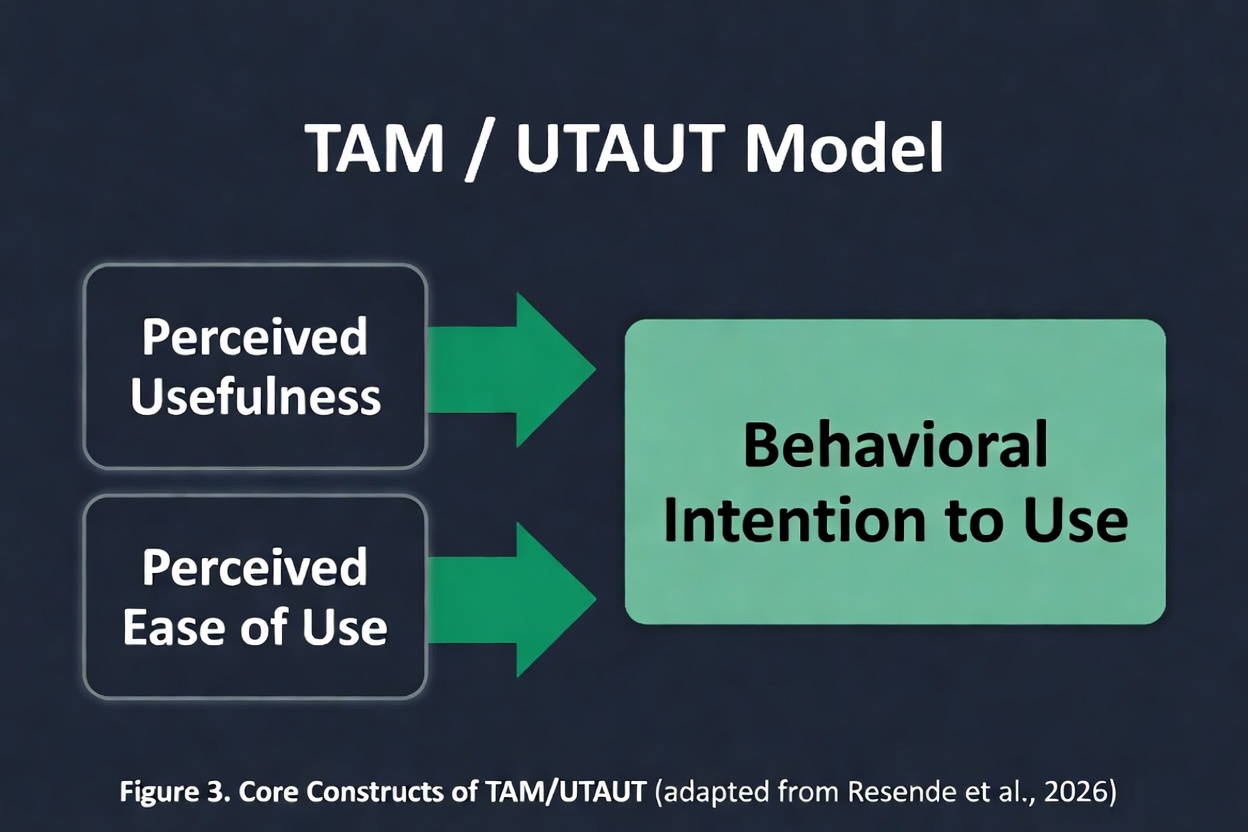
Several well-established models help explain why people resist new information systems and what makes them more likely to accept digital changes. One widely used approach is the Technology Acceptance Model, or TAM. This framework shows that employees tend to embrace a new system when they see it as useful for getting their work done and easy to learn. A more complete version, called the Unified Theory of Acceptance and Use of Technology (UTAUT), builds on TAM by adding other real-world influences such as what coworkers and leaders think, how much training and support is available, and even factors like age or prior computer experience. Recent literature reviews point out that these models give a solid starting point for understanding adoption, but they sometimes treat resistance as nothing more than the flip side of acceptance (Resende et al., 2026).
In practice, resistance often deserves its own attention because it can stem from deeper concerns about daily routines and job security.
"Management support and perceived direct and indirect benefits were positively related to the acceptance of DT intentions."
— Huang et al. (2023)
Another helpful lens comes from a dual-factor model developed specifically for digital transformation projects. This approach separates outside influences, such as strong leadership backing and general openness to change, from inside feelings that employees carry with them. The inside factors include how much someone believes the new system will deliver clear benefits to their own tasks and how strongly they feel pulled toward sticking with the old way of doing things. When both sets of factors are considered together, the research shows that management support and the promise of real benefits increase the chance that people will buy in (Huang et al., 2023). At the same time, the pull of old habits can quietly undermine even the best-planned rollout.
A third perspective looks at robotic process automation through the Theory of Planned Behavior combined with user-resistance ideas. Here the key insight is that social pressure from colleagues and bosses can strongly encourage use, but worries about losing meaningful work or feeling replaced by software can create powerful pushback (Lee et al., 2025).
Taken together, these frameworks move the conversation past the idea that technology alone will win people over. They show that resistance grows out of a mix of personal views, team dynamics, and how well the new system fits real work life. For IT managers, the practical takeaway is clear: plan change efforts that highlight genuine benefits, reduce the fear of the unknown through training and clear communication, and keep leadership visibly involved (Valtonen & Holopainen, 2025).
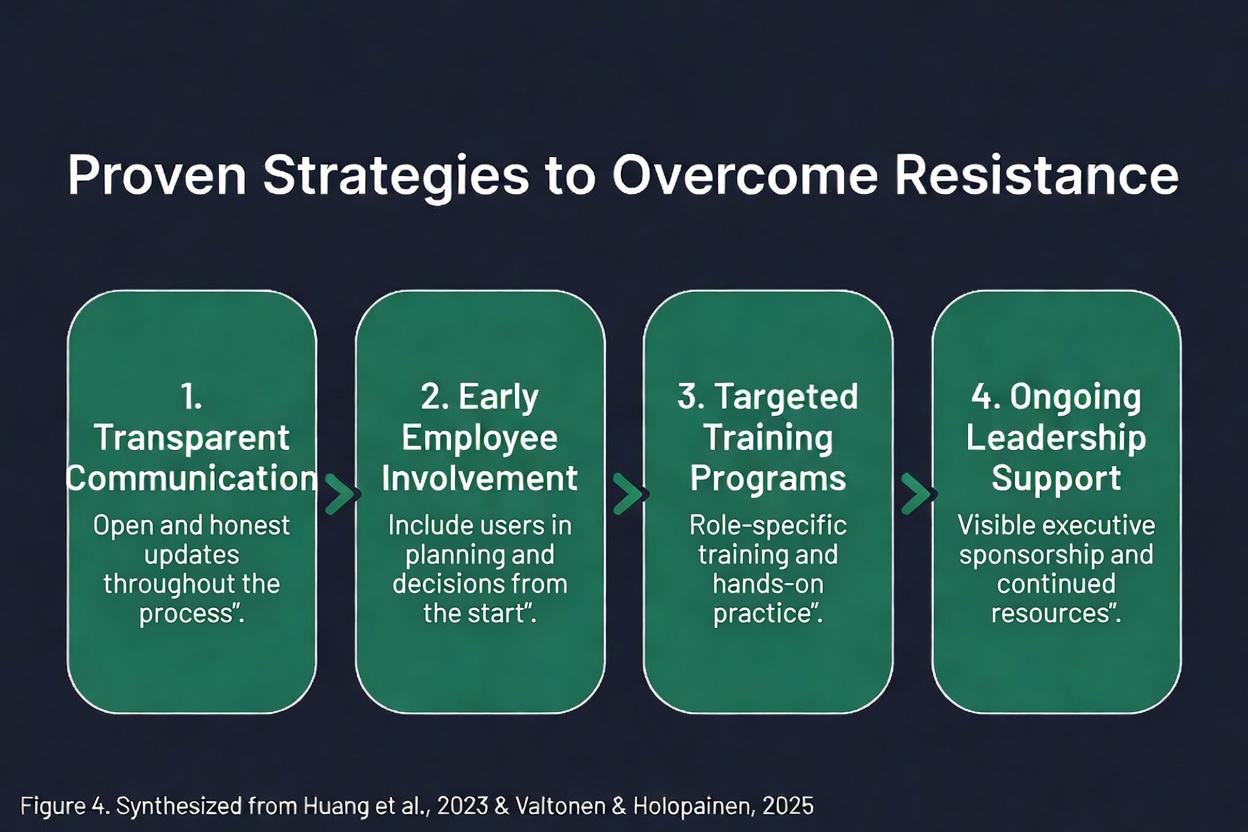
Effective mitigation of resistance requires targeted, human-centered strategies that directly address its root causes. Key approaches include:
Organizations need “active listening, conflict mediation, and continuing education processes.”
— Cavalcante et al. (2025)
These strategies, supported by Valtonen & Holopainen (2025), Huang et al. (2023), and Lee et al. (2025), transform resistance from a barrier into an opportunity for meaningful organizational learning.
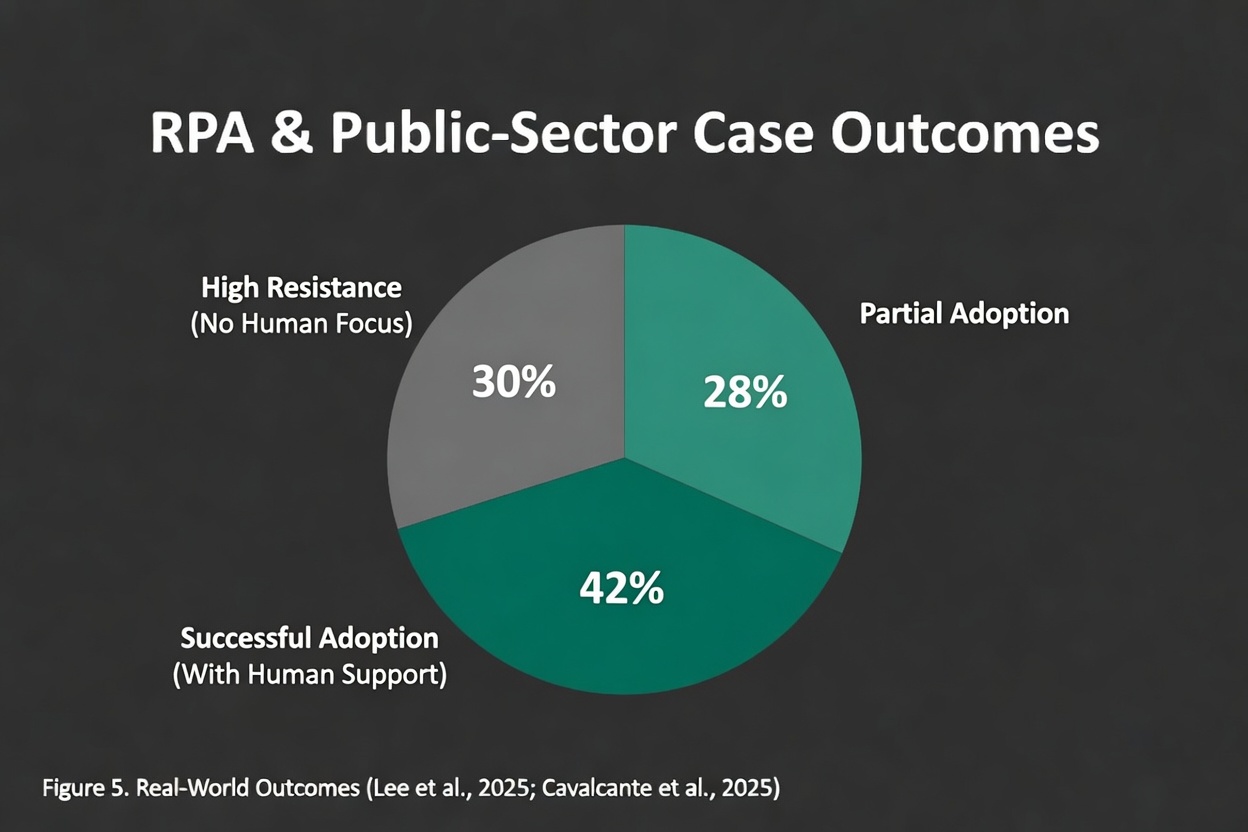
Real-world applications of this research are evident in public-sector digital procurement systems, robotic process automation (RPA) initiatives, and broader digital transformation projects. In each case, even well-designed systems can face significant user resistance if the human element is ignored (Cavalcante et al., 2025; Lee et al., 2025; Huang et al., 2023).
"Even when an information system is evaluated as intuitive and interactive, it may still face user resistance."
— Cavalcante et al. (2025)
IT managers should:
Successful information system implementation depends on both the technical quality of the system and the people who will use it. Resistance to change is not merely an obstacle to be removed — it is valuable feedback that highlights gaps in communication, training, planning, and alignment with daily work realities (Cavalcante et al., 2025; Resende et al., 2026; all sources).
By applying the theoretical frameworks, addressing root causes, and implementing the practical strategies outlined in this research, organizations can significantly improve adoption rates and realize the full benefits of digital transformation. Technical excellence alone is not enough; the human side must be deliberately designed into every project.
“Alignment between the system’s objectives and the realities of everyday work is essential for success.”
(Adapted from Cavalcante et al., 2025)
1. How might resistance differ between public-sector and private-sector implementations?
2. What role should IT managers play in addressing perceived inertia?
3. How can organizations measure the success of change-management strategies?
Please share your thoughts, questions, or real-world examples in the discussion board!
Valtonen, A., & Holopainen, M. (2025). Mitigating employee resistance and achieving well-being in digital transformation. Information Technology & People, 38(8), 42–72. https://doi.org/10.1108/ITP-05-2024-0701
Cavalcante, E. F. G., Vilela, B. de A., Ferreira, R. F. C., & Souza Junior, W. C. de. (2025). Digital transformation in the public sector: User resistance to the federal procurement management system. Revista de Administração Pública. https://periodicos.fgv.br/rap/article/download/94578/88110
Huang, C.-K., Lee, C. A., & Chen, Y.-N. (2023). The duality determinants of adoption intention in digital transformation implementation. Journal of Organizational and End User Computing, 35(3), 1–28. https://doi.org/10.4018/JOEUC.330534
Resende, S. L., Dias, G. P., & Correia, P. (2026). Resistance to digital transition: A literature review. Applied Operations and Analytics, 2(1). https://doi.org/10.1080/29966892.2026.2630450
Lee, K., Zo, H., & Jeong, M. (2025). Understanding user acceptance of robotic process automation: The user resistance perspective. Industrial Management & Data Systems, 125(3), 1000–1019. https://doi.org/10.1108/IMDS-07-2024-0628
All sources are current (published within the past 3 years) and peer-reviewed, meeting CIS 515 assignment requirements.